Beyond GDP: New Measures for a New Economy
by Lisa Mastny | January 31, 2012
A new report from Demos, Beyond GDP: New Measures for a New Economy, points out the problems with using GDP as the predominant benchmark of our economic and social progress.
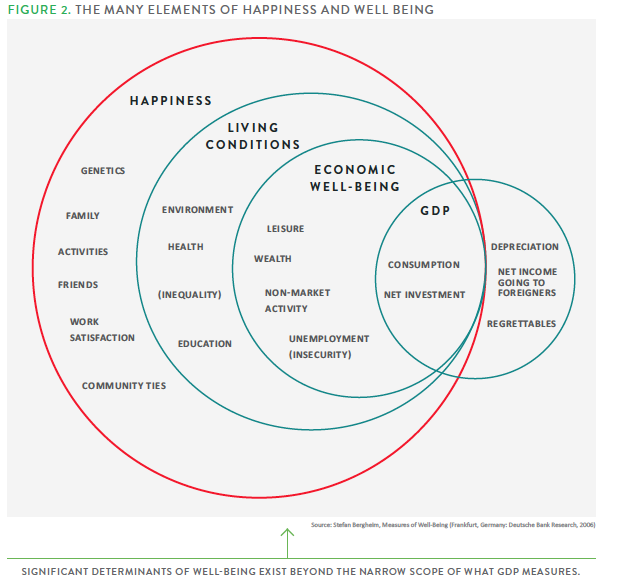
In reality, GDP obscures or ignores essential aspects of Americans’ economic and social welfare, as well as important social and environmental dimensions of our national welfare and future well-being.
The report illustrates how, when we hold GDP against other indicators, it’s clear that our policy priorities have been wrong for 30 years. But a pervasive narrative linking GDP and market growth to social progress has shielded our politics from any real accountability for the lack of progress most Americans rightly feel in their everyday lives.
Demos has also released a set of infographics, Does Growth Equal Progress? The Myth of GDP, that charts important social measures against GDP growth. The infographics show that GDP growth has not delivered real progress for average Americans, supporting the case for why GDP is an incomplete measure and needs to be supplemented by alternative measures that are much better suited to the economic challenges we face today.
Among the points noted in the report:
- GDP does not distinguish between spending on bad things and spending on good things. By this measurement, the BP oil spill in the Gulf of Mexico “positively” contributed to the economy just like the many good and services that people actually want or need.
- GDP doesn’t account for the distribution of growth. Our total national income has doubled over 30 years, and so has the share of national income going to the wealthiest households, but average households have seen little or no income gains. GDP doesn’t care if growth is captured by a few or widely shared.
- GDP doesn’t account for depletion of natural capital and ecosystem services. If all the fish in the sea are caught and sold next year, global GDP would see a big boost while the fishing industry itself would completely collapse.
- GDP doesn’t reflect things that have no market price but are good for our society, like volunteer work, parenting in the home, and public investments in education and research.
The report recommends advancing national accounting reforms and other alternative measures of economic progress and well-being, such as the Genuine Progress Indicator. But it also notes that these technical changes alone will not be enough.
Rather, these changes will be integral to transforming our politics—broadly, making it more and more difficult for politicians, business leaders, and the media to hide behind GDP growth while ignoring deteriorating household living standards and well-being, unsustainable environmental impacts, and the social disarray caused by public disinvestment in non-market goods like parenting, education, health, and other key sources of human and social well-being.